20 DEFINITIVE SUGGESTIONS FOR CHOOSING THE SCEYE PLATFORM
Sceye and Softbank The Haps Partnership For Japan Haps Japanese Partnership
1. This Partnership is More than just Connectivity
Two organizations with different backgrounds such as a New Mexican-based the company that makes stratospheric aircraft and one of Japan’s top telecom conglomerates for a nationwide network of high-altitude platform stations the implications are much greater than broadband. There is a reason for this. Sceye SoftBank partnership represents a legitimate bet on the stratospheric system becoming a permanent, revenue-generating network of national telecoms -It is not a test project or a demonstration of principle, rather rather the beginning of a real-time commercial rollout with a clearly defined timeframe as well as a large-scale plan for the country.
2. SoftBank is a strategic investor to back Non-Terrestrial Networks
SoftBank’s interest in HAPS hasn’t come out of the blue. The geography of Japan — thousands of islands, mountainous terrain and coastal regions that are regularly attacked by earthquakes and storms which creates permanent coverage gaps that the ground infrastructure alone cannot economically close. Satellite connectivity helps, but delay and cost are still the primary factors for mass market applications. The stratospheric layer, which is located at 20 kilometers, keeping its position above specific regions while delivering low-latency broadband services to conventional devices, resolves many of these issues at once. For SoftBank investing in stratospheric platforms is a logical expansion of the existing strategy in order to diversify out of terrestrial network dependency.
3. Pre-Commercial Service Plans for Japan in 2026 Signal Real Momentum
The primary point of difference that separates this alliance from previous HAPS announcements is that the partnership will target the introduction for pre-commercial service in Japan for 2026. It’s more than a vague announcement, it’s actually a specific operational milestone with regulatory, infrastructure, and commercial implications attached to it. When they reach precommercial status, the platforms must be able to perform station keeping in a reliable manner, delivering high-quality signals, and linking to SoftBank’s current network infrastructure. The fact that this date has been publicly declared as a goal suggests both parties have cleared the technical and regulatory hurdles for it to be considered an actual goal rather than aspirational marketing.
4. Sceye Brings Endurance and Payload Capacity that other platforms struggle to Match
Not all HAPS vehicle can be used to support an extensive commercial network. Fixed-wing solar vehicles typically trade up payload capacity for speed at altitude. This limits the amount of telecommunications, or observation equipment they can carry. Sceye’s airship that is lighter than air takes an entirely different approach- buoyancy holds the weight of the airship, which means available solar power is utilized for propulsion as well as station-keeping and charging onboard systems rather that just a blip. The design’s decision to incorporate buoyancy into the structure gives significant benefits in payload capacity and mission endurance as well as mission endurance. Both of these factors matter enormously when you’re trying to ensure continuous coverage across populated areas.
5. The Platform’s Multi-Mission Capability Makes the Economics Work
One of the lesser-known aspects of the Sceye method is that an individual platform does not need to justify its operating cost by only generating revenue from telecoms. The same system that offers stratospheric bandwidth can also carry sensors for greenhouse gas monitoring as well as disaster detection Earth observation, and disaster detection. In a country such as Japan which is particularly at risk from dangers from natural disasters and has national commitments around emissions monitoring This multi-payload approach can make the infrastructure a lot easier to justify at the government as well as a commercial level. The antenna for telecoms and the climate sensor aren’t competing -they’re both sharing a platform that’s already up there anyway.
6. Beamforming along with HIBS Technology make the signal commercially usable
In order to offer broadband service from 20 miles away, it isn’t merely a matter making an antenna point downwards. The signal has to be shaped, directed, and controlled dynamically in order to serve users efficiently across a larger geographic area. Beamforming technology allows the telecom antenna in the stratospheric to focus the energy of signals the areas of greatest demand, instead of broadcasting in a uniform manner and using up capacity in empty open oceans or uninhabited terrain. Coupled with HIBS (High-Altitude IMT Base Station) standards that allow the platform to be compatible with existing 4G and 5-G device ecosystems, which means that regular smartphones can connect with no special equipment, which is a crucial necessity for any mass-market deployment.
7. Japan’s Island Geography Is an Ideal Test Case for the Rest of the World
If stratospheric connectivity is successful to a greater extent in Japan then the pattern is easily exportable to other nations that faces similar coverage challengeswhich is a majority people around the world. Indonesia is one of them. The Philippines, Canada, Brazil and a host of other Pacific island countries all face variants of the same issue that is a result of populations scattered across terrain which impedes the conventional infrastructure economy. Japan’s mix of technological sophistication and the capacity to regulate genuine geographic need is arguably the most effective possibility of proving ground for the nation-wide network that is built on stratospheric platforms. This is what SoftBank and Sceye demonstrate here will guide deployments throughout the world for years.
8. The New Mexico Connection Matters More Than It appears
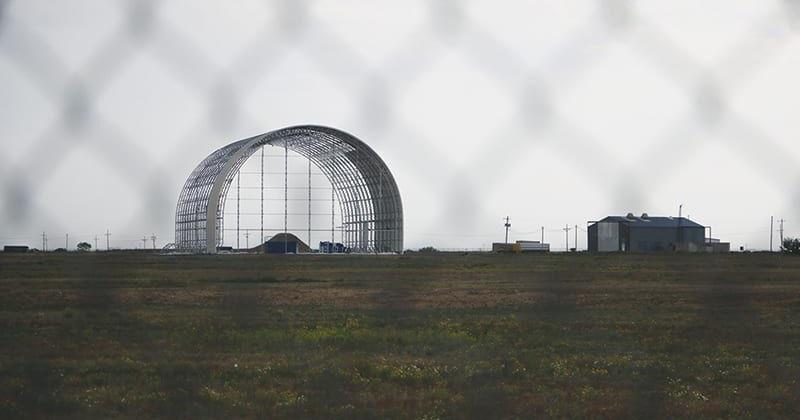
Sceye operating out of New Mexico isn’t incidental. The state has high altitude testing conditions, a well-established aeronautical infrastructures, and an airspace that suits the kind of long-term flight testing that stratospheric vehicle development requires. As one of the most serious aerospace companies that operate in New Mexico, Sceye has constructed its development program in the context of genuine engineering iterations rather than press release cycles. The gap between announcing the HAPS platform and actually operating an ongoing station for weeks for a period of time is vast, however, and Sceye’s New Mexico base reflects a company that has been doing the not-so-glamorous job required to bridge that gap.
9. The Founder’s Vision has shaped the Partnership’s Long-Term Goals
Mikkel Vestergaard’s experience — rooted in applying technology to solve environmental and humanitarian issues has had an impact on the kind of business Sceye is attempting to achieve and the reason. The partnership with SoftBank isn’t purely a commercial telecoms venture. Sceye’s focus at disaster prevention and monitoring at a real-time pace, and connectivity for those in remote areas represents a core belief that infrastructure in the stratosphere must serve broad social purposes alongside commercial ones. This philosophy has likely created Sceye the ideal partner for a company, such as SoftBank, which operates in a regulatory and public environment where corporate purposes are paramount.
10. 2026 is the Year that the Stratospheric Tier either Proves Itself or Resets Expectations
The HAPS sector has been promoting commercial deployment for a longer time than many observers are able to recall. What is unique about these timelines Sceye and SoftBank timetable so important is that it ties one specific country, specific operator, and a service milestone to a certain year. If commercial pre-commercial services in Japan launch on schedule and are able to perform as per specifications 2026 will be the point at which connectivity in the stratosphere shifts from promising technology to functional infrastructure. If it doesn’t, the sector will be faced with more difficult questions over whether the engineering difficulties are as well-solved according to recent statements. It doesn’t matter, the collaboration has created a line in the sky that is worth keeping an eye on. Check out the recommended detecting climate disasters in real time for site recommendations including Stratospheric infrastructure, softbank investment in sceye, softbank sceye haps japan 2026, sceye haps project, SoftBank investments, Stratospheric broadband, SoftBank investments, softbank haps pre-commercial services japan 2026, Sceye stratospheric platforms, sceye haps airship payload capacity and more.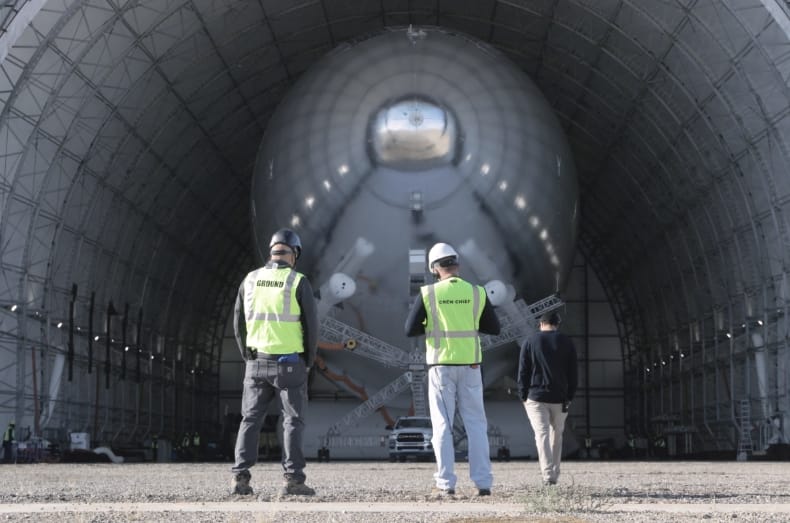
SoftBank’S Haps Pre-Commercial Services What’s Coming In 2026?
1. Pre-Commercial Is A Specific important and significant milestone
The wording is crucial here. Precommercial services represent a distinct phase in the development of any new communications infrastructure. It goes beyond the initial demonstration, past proof-of-concept flight campaigns, and in the area where actual users can enjoy real-time services under conditions that provide a rough idea of what commercial deployment might look like. It implies that the platform is station-keeping reliably, the signal is meeting quality requirements that the actual applications rely on, the ground infrastructure interfaces with the spheric telecom antenna appropriately, and the required regulatory approvals are in place to provide service to areas that are densely populated. Achieving pre-commercial status isn’t an event in the marketing calendar. It’s a practical one, so the mere fact SoftBank has committed publicly to being able to achieve it with Japan in 2026, sets an example for the engineering on both sides of the partnership needs to surpass.
2. Japan is the best country to Start This First
The choice of Japan as the place to launch stratospheric pre-commercial services isn’t arbitrary. Japan is a country that has a combination of traits that make it ideal as a initial deployment area. The country’s geography — mountains, terrain in addition to the thousands of islands that are inhabited extensive and complex coastlines -pose genuine concerns about coverage, which stratospheric infrastructure is designed to tackle. The regulatory framework is advanced enough to address the airspace, spectrum and other issues that stratospheric operations raise. The mobile network infrastructure, operated by SoftBank gives it the integration layer that a HAPS platform will need to connect to. Furthermore, the people of HAPS have the device ecosystem as well as the digital literacy to take advantage of stratospheric broadband services without requiring some time for technology adoption that would delay meaningful uptake.
3. Expect Initial Coverage to Focus on the areas that are not served and Strategically Important Areas
The pre-commercial deployments will not encompass the entire country in one go. More likely, it’s specific deployments targeting regions in which the gap between current coverage and what stratospheric connection will bring is greatest and also where the strategic case for priority coverage is the strongest. In Japan’s situation, that is the case for island communities that are currently dependent on costly and insufficient connections to satellites. It also includes mountains and areas of rural that have terrestrial network economics that have always been insufficiently supported by infrastructure, along with coastal zones in which resilience to disasters is a top priority for the nation due to the threat of typhoons and earthquakes to Japan. These areas provide the clearest evidence of connectivity’s benefits and also the most useful operational data needed to refine coverage, capacity and monitoring of platforms before the rollout to larger areas.
4. The HIBS Standard Is What Makes Device Compatibility Possible
One of those questions one can reasonably ask about the stratospheric internet can be if it is required specialist receivers or works with ordinary devices. A framework called the HIBS Framework — High-Altitude IMT Base Station -is the result of a standards-based solution to this question. By adhering to IMT standards that underpin 5G and 4G networks throughout the world, this stratospheric-based platform operating as a HIBS can be compatible with the smartphone and device ecosystems that are already in the coverage area. The SoftBank pre-commercial service, that means users in areas of coverage should be able to connect to the stratospheric network using their existing devices without needing to purchase additional hardware -a crucial condition for any service which intends to be able to reach the communities as well as those living in remote regions, who most need alternative connectivity options and are the least likely to invest in equipment that is specialized.
5. Beamforming Is The Way To Determine How Capacity is Distributed
An stratospheric location that covers a large footprint doesn’t automatically provide the same useful capacity across the footprint. How spectrum available and signal energy is distributed across the coverage area an issue of beamforming capacity — the ability of the platform to direct the signal towards the places where demand and use are centered, instead of broadcasting uniformly across geography that includes vast uninhabited areas. As part of SoftBank’s precommercial phase demonstrating that beamforming from an ultraspheric broadband antenna can give commercially sufficient capacity to cities with large coverage footprint will be vital as is demonstrating the coverage area. A broad footprint with little, non-usable capacity has little value. Specific delivery of genuine usable broadband to specified areas of service is a proof of the commercial model.
6. 5G Backhaul Application may Precede Direct-to-Device Services
In some scenarios, it is the easiest and fastest to validate application of stratospheric connectivity isn’t direct connectivity to consumers, but 5G backhaul – connecting existing infrastructure on the ground in areas where terrestrial backhaul isn’t sufficient or unexistent. A remote location may have one or two network devices on the ground, but do not have the capacity connection to the wider network that makes it valuable. A stratospheric platform providing that backhaul link, provides 5G coverage to the communities that are served by existing ground systems without needing end users to communicate directly with the stratospheric infrastructure. This type of use-case is easier to test technically, produces clearly quantifiable benefits, and builds operational confidence in the performance of the platform before the more intricate direct-to-device-service layer is included.
7. SCEYE’S Platform Performace in 2025 Sets Up What’s Possible in 2026
Pre-commercial service targets for 2026 will be determined by the performance the Sceye HAPS airship achieves operationally in 2025. Validation of station-keeping, payload performance under real weather conditions, energy system behavior across a range of diurnal cycles, and the integration tests that must be conducted to verify that the platform functions correctly with SoftBank’s networking architecture all must be completed before commercial services can start. Updates on Sceye HAPS airship status from 2025, therefore, aren’t just news items — they represent the most significant indicators of whether the 2026 milestone is tracking according to schedule or building the kind and amount of tech-related debt extends commercial timelines to the side. Engineering progress in 2025 is the 2026 story being planned in advance.
8. Disaster Resilience Will Be a Capability Tested, Not A Claimed One
Japan’s vulnerability to disasters means any stratospheric pre-commercial service operating across the country will certainly experience challenges — earthquakes, typhoons, disruption to infrastructure will test the system’s resilience and its worth as an emergency communications infrastructure. This isn’t just a matter on the use context. It is one of its best features. A stratospheric platform that operates a station as well as providing connectivity and observation capability during large earthquakes or weather event in Japan will demonstrate something that even the most rigorous amount of controlled testing will ever replicate. The SoftBank Phase prior to commercialization will provide concrete evidence of how the infrastructure performs when terrestrial networks are disrupted and provide the exact evidence that all other potential operators of areas that are vulnerable to disasters must examine before making a decision on their own deployments.
9. The Wider HAPS Investment Landscape Will Respond to What happens in Japan
It is true that the HAPS segment has drawn meaningful investment from SoftBank and others, but the wider telecoms infrastructure sector remains a watching brief. Large institutional investors, national telecoms service providers from other countries and even governments who are studying stratospheric infrastructures for their own covering and monitoring needs are all watching what happens in Japan and paying close attention. An efficient pre-commercial deployment- platforms on station functional, services running, performance metrics meeting thresholds -are likely to speed up the decision-making process across the industry with a speed that ongoing demonstration flights and partnerships will not. Similarly, large delays or performance issues will trigger revisions to timelines across the entire industry. The Japan deployment has a significant impact for the whole stratospheric connectivity sector, not only for The Sceye SoftBank partnership specifically.
10. 2026 will tell us if Stratospheric Connectivity Has Crossed the Line
There’s always a boundary in the evolution of any disruptive infrastructure technology between the phase where it is promising and the phase where it is real. Mobile networks as well as internet infrastructure have all crossed that boundary at certain timesnot when the technology was first demonstrated however, it was when it was first functioning with enough reliability that individuals and institutions started planning around its existence rather than the potential. SoftBank’s initial commercial HAPS services in Japan are the most plausible future-oriented option for the time when stratospheric connectivity crosses that line. If the platforms will be able to support stations throughout Japanese winters, if the beamforming has enough capacity to island communities, and how the service is able to withstand the types of conditions Japan frequently encounters will determine whether 2026 is remembered as the year stratospheric internet became an actual infrastructure or the year the timeline was rewritten. Follow the recommended HIBS technology for website tips including sceye haps airship payload capacity, sceye connectivity solutions, Direct-to-cell, sceye haps airship payload capacity, sceye aerospace, Solar-powered HAPS, sceye haps softbank, sceye disaster detection, sceye greenhouse gas monitoring, marawid and more.